
Inspiration
It All Begins Here
Finding Inspiration Again
I’ve always believed that the best inspiration comes from experiencing life, not forcing creativity at a desk. When my work slows or I step away for a while, I don’t panic—I move. Long motorcycle rides, hang gliding, listening to music, learning a new recipe in the kitchen. These moments pull me back into a creative headspace without asking for anything in return.
After a long break, inspiration doesn’t arrive all at once. It shows up quietly, through motion and curiosity. Lately, that pull has been guiding me back toward acrylic pouring. I miss exploring color, embracing unpredictability, and letting those magical accidents happen—the moments where the painting takes over and surprises me.
Before I fully return to that process, though, there’s a bigger transition underway. I’m searching for a new place to live—a new community, a neighborhood that feels like home. Growing up in the San Francisco Bay Area shaped me creatively, and leaving isn’t easy. But it’s no longer sustainable, and acknowledging that has opened the door to something new.
Interestingly, this period of uncertainty has been deeply motivating. I find myself imagining the studio space I want and need. How the light hits the workspace. Where the paints live. Where drawing, electronics, and experimentation coexist. Just visualizing that environment has re-ignited my creative energy.
Inspiration, for me, also comes from staying open—open to new places, new experiences, and unexpected opportunities. I’m leaning into that openness right now, and it feels good. Wherever I land next, I’m excited to continue creating, exploring, and sharing the journey as it unfolds.
Taking a Break
I stepped away from painting and personal creative projects. The workload and stress of my corporate job took over, and “me time” started showing up in less creative ways.
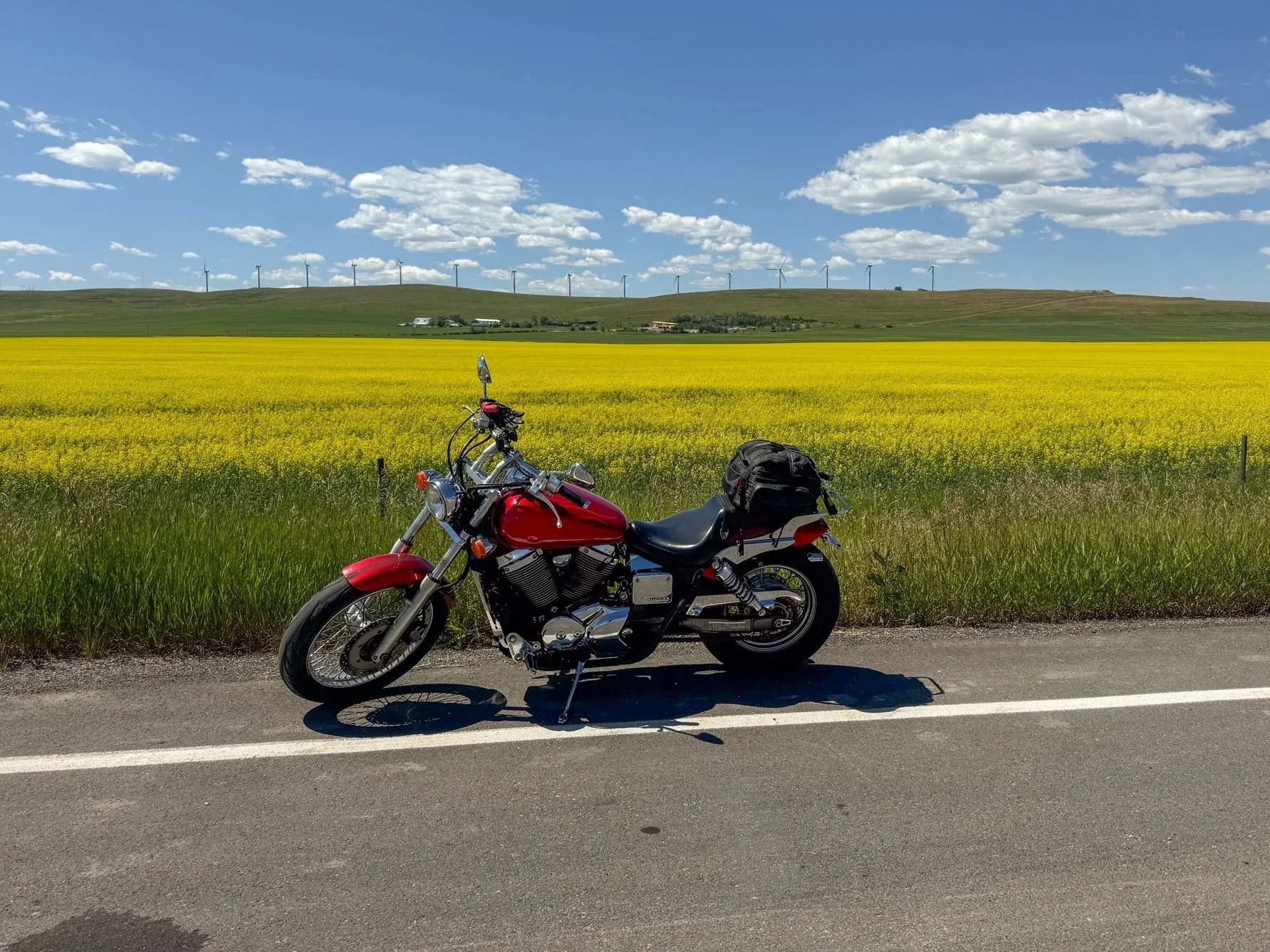
Instead of a studio practice, I bought a motorcycle and every weekend explored all the roads within a 500 mile radius of my home, the SF Bay Area. I leaned into spontaneous travel and new experiences —ways to stay inspired without picking up a brush. Those moments helped, but they also clarified something I couldn’t ignore: for my own sanity, I needed a change. Eventually, that realization led me to step away from my corporate role and start rethinking what comes next.
At the same time, I’ve learned that I’m actually pretty good at doing nothing. (Who knew?) That space has been valuable. It’s given me time to think, reset, and plan my next chapter.
The big theme right now is movement—both literally and creatively. I’m thinking seriously about moving, about finding a place and a community where I can thrive. At the same time, I’m feeling the pull back to painting and drawing, back to making work just for the sake of it.
This pause wasn’t an ending. It was a recalibration. And I’m genuinely excited about what’s coming next.
Exploration
It All Begins Here
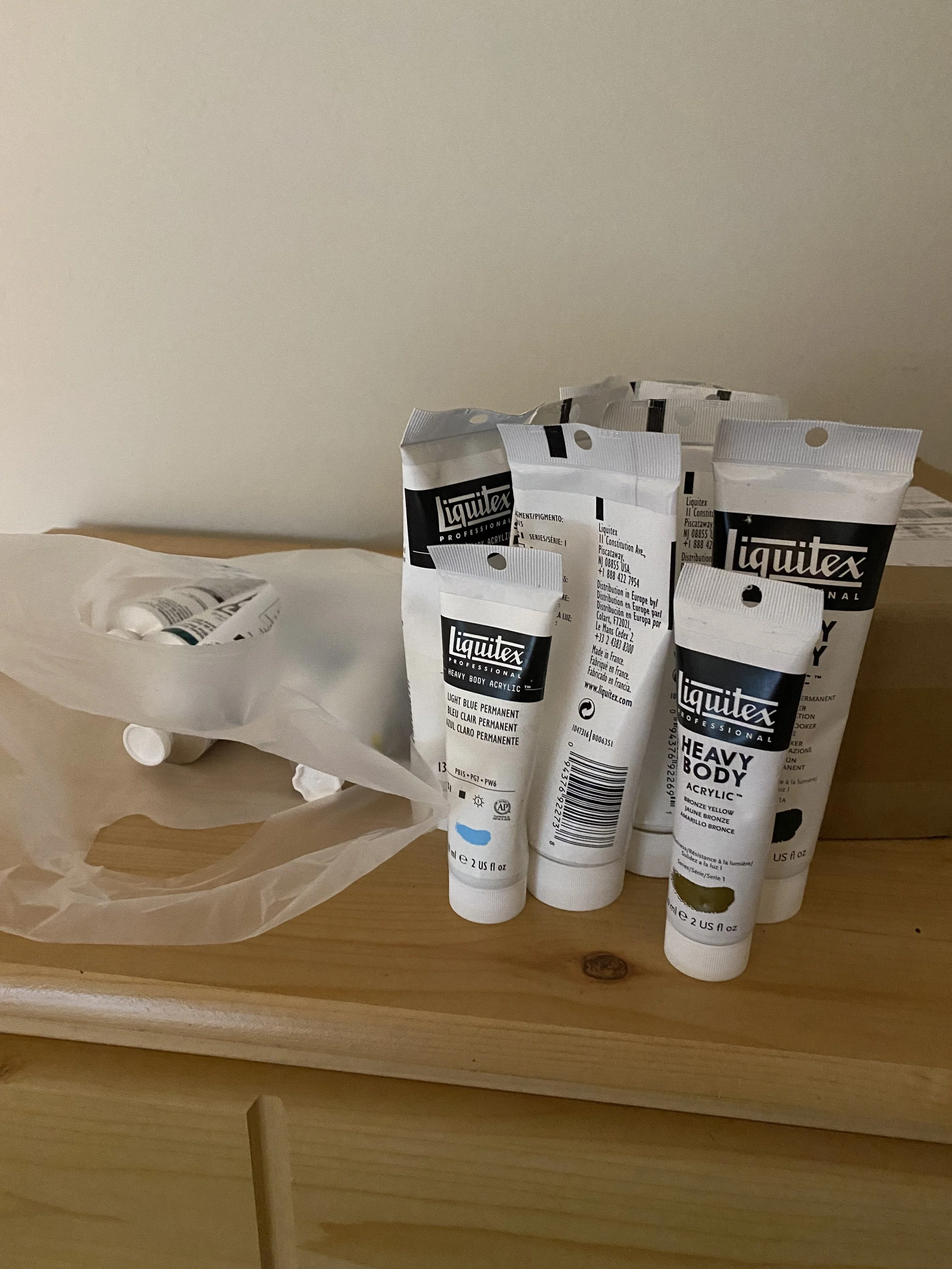
Acrylic pouring is a playground for exploration—less about perfection and more about curiosity. I’m drawn to the unpredictability of the medium and the way small changes in process can completely transform the outcome. Each pour feels like a collaboration between intention and chance.
I experiment with a range of styles—Dutch pours, flip cups, swipes, and mixed pours—learning how each technique creates its own rhythm and movement. Some feel energetic and chaotic, others slow and meditative. Moving between them keeps the process fresh and constantly surprising.
Tools are just as important as technique. I use a blow dryer to push paint into soft, flowing forms, and a simple straw for more controlled bursts of movement. Paper towels create swipes that reveal layers beneath the surface. Adding silicone oil introduces dramatic cells and bubble effects, while palette knives let me step back in and refine details once the pour begins to settle.
Color becomes the final variable—and often the most emotional one. I play with black versus white backgrounds, high-contrast light and dark combinations, and palettes inspired by nature and imagination. Some pieces lean into oceanic depth and motion, while others drift toward space-like scenes filled with stars and cosmic textures.
Through constant experimentation, acrylic pouring becomes less about any single result and more about discovery—learning how materials, tools, and color interact, and continuing to define my own visual language within the chaos.
Preparation
It All Begins Here
Preparing the Materials
Before any paint hits the surface, a lot of time goes into preparation. This part of the process isn’t flashy, but it’s essential. Clean edges, smooth finishes, and predictable paint flow all start long before the pour.
Birchwood Canvases
I work in batches to keep things efficient and consistent.
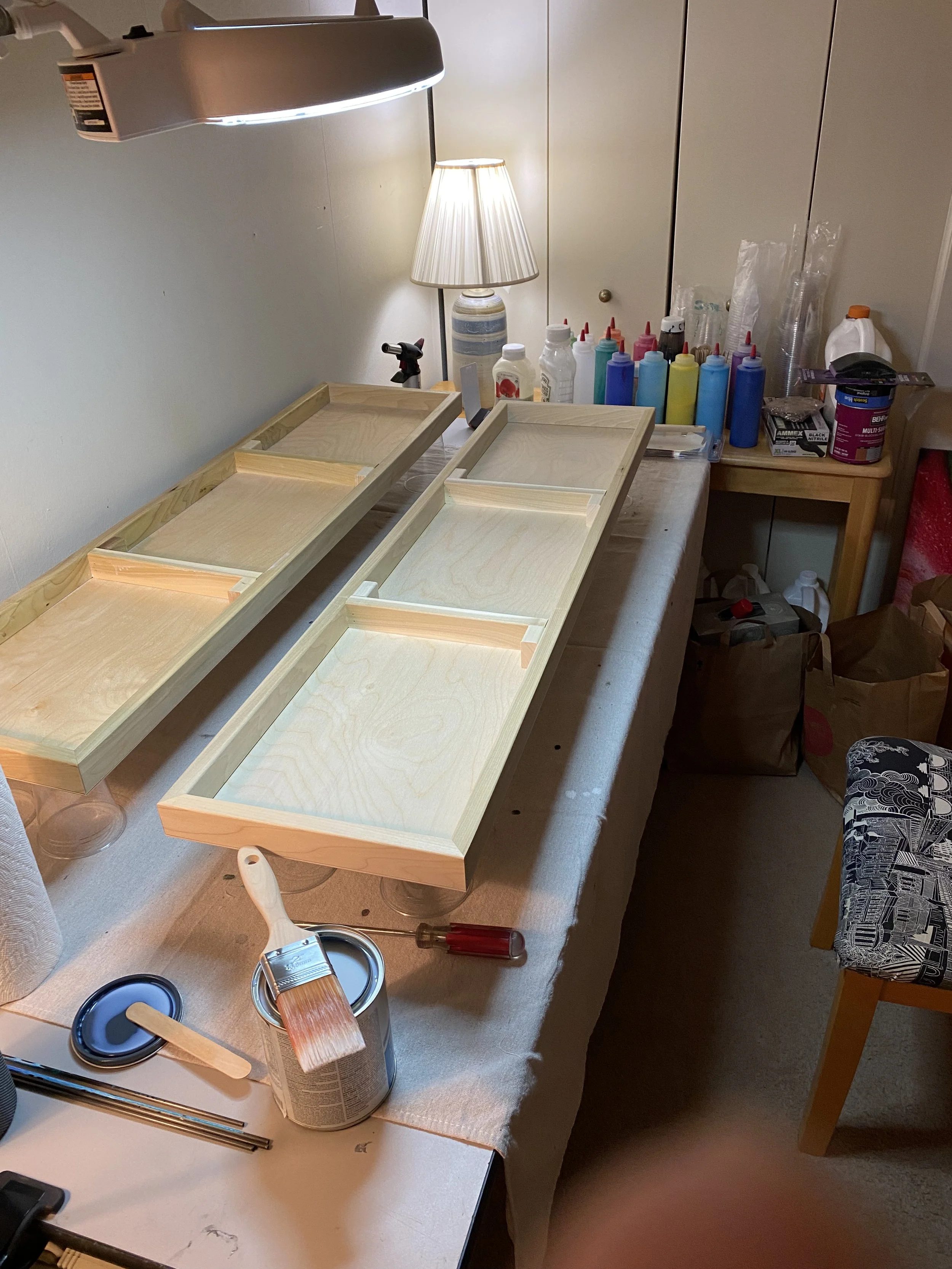
First, each birchwood canvas is sanded smooth and sealed with an initial clear coat varnish—including the back. I like the piece to feel finished from every angle, not just the front.
After that cures, I lightly sand again and apply a thicker clear coat. This step is all about the edges. When the painting is complete, the sides have a polished, intentional look rather than feeling like an afterthought.
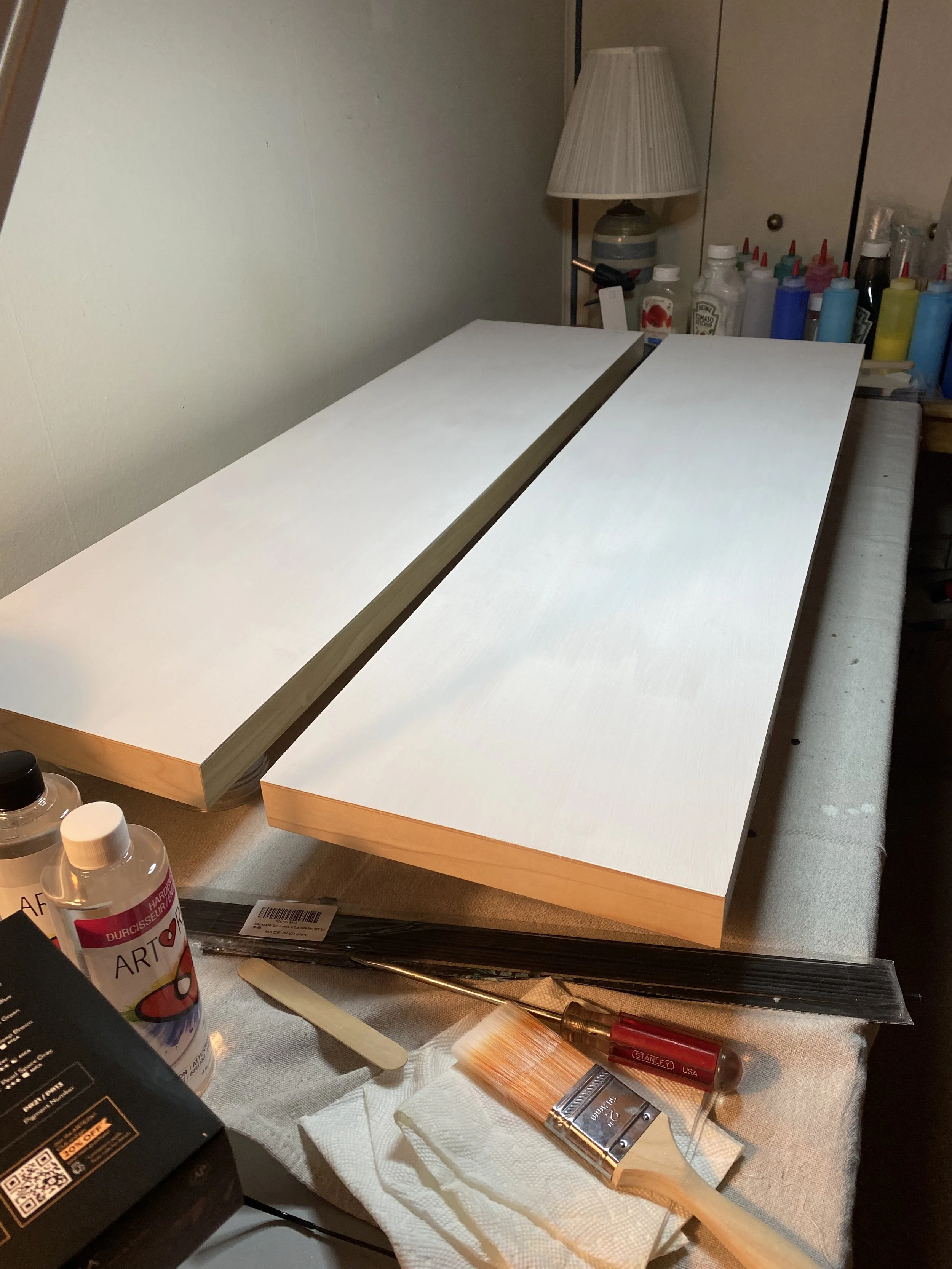
Once the edges are sealed, I sand the surface and apply a primer to the top. This creates the right base for the acrylic pour and helps the paint move the way I want it to.
Finally, I mask off the outer edges with tape. This allows the inks and epoxy to flow naturally over the sides while still giving me crisp, clean edges when everything cures.
Mixing the Inks
Color decisions usually start with a rough palette in mind, but flexibility is key. I mix acrylic paint with Floetrol and water, adjusting ratios based on the effect I’m going for. The mixes are stored in condiment bottles so they’re ready to use whenever inspiration strikes.
Having colors pre-mixed keeps the creative flow uninterrupted once the pour begins.
Studio Setup & Drying
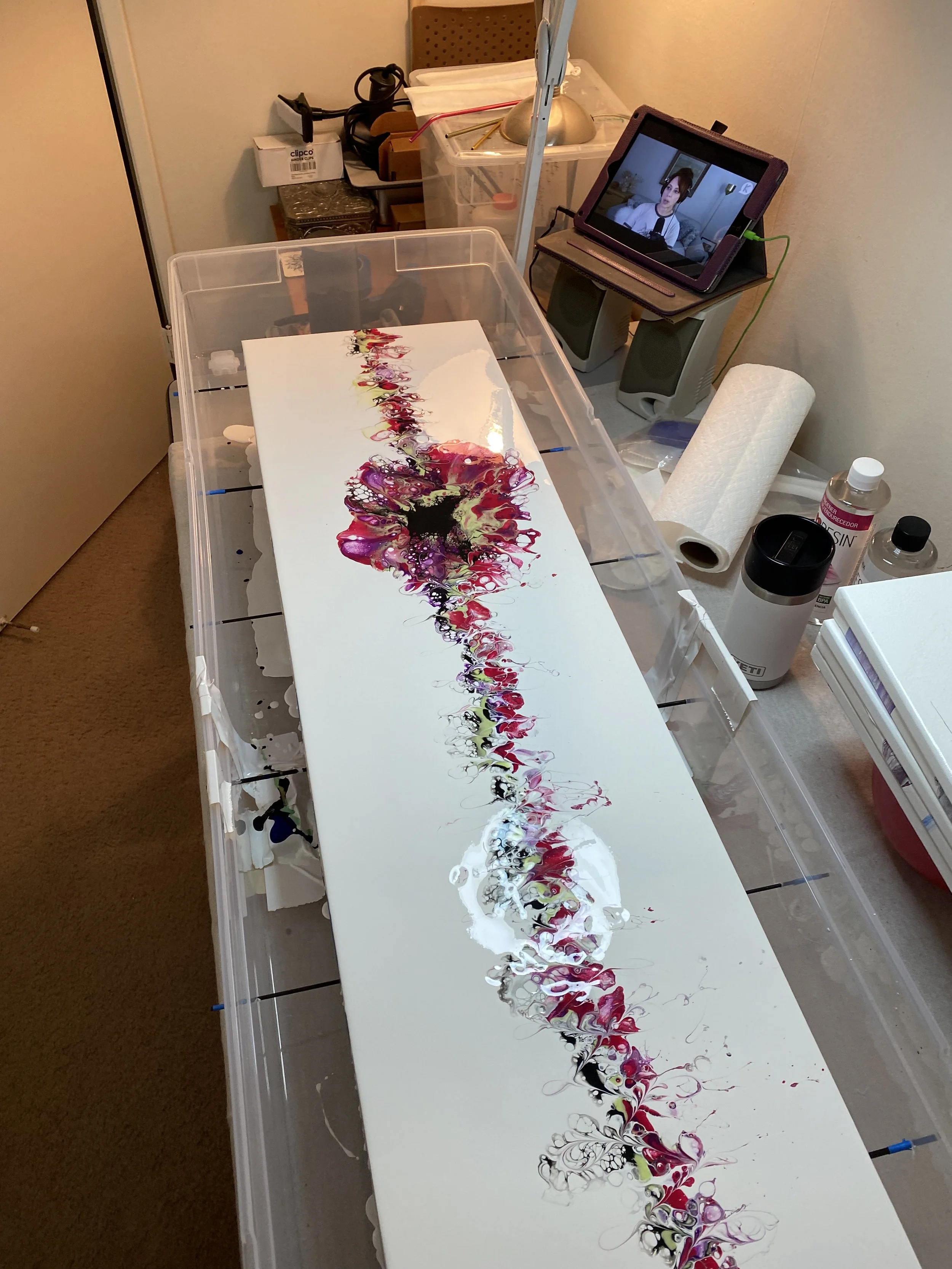
The workspace matters just as much as the materials. I set up painting tubs and drying racks with flipped cups to raise the canvases off the base. This lets the paint flow cleanly off the edges without pooling underneath.
Leveling is critical—both during the pour and while drying. Even a slight tilt can send paint drifting in ways you definitely didn’t plan. Depending on ink thickness, temperature, and humidity, drying can take anywhere from a couple of days to nearly a week.
Just as important is keeping the studio as clean as possible. Dust, lint, and stray fibers have a way of finding wet paint, and avoiding them is part of the discipline of the process.
All of this prep creates the foundation for the unpredictable moments I love most—when the paint takes over and something unexpected emerges.
Getting Started
It All Begins Here
How I Got Started
Like a lot of people, the pandemic cracked open a little extra time—and a lot of creative restlessness. At the time, my day job had me deep in graphic design and leading teams inside the corporate tech world. I was making things constantly, but not always for myself. Acrylic pour painting became a way to stay loose, curious, and hands-on without rules or client expectations.
It started simply: watching way too many YouTube videos and falling down Instagram rabbit holes. I studied artists, techniques, color choices—anything that made me stop scrolling. I wasn’t trying to copy anyone. I just wanted to understand why certain pours worked and others didn’t.
From there, it was all experimentation. Different paints. Different brands. Different pouring mediums. Cheap materials, better materials, and a lot of trial and error. Some pieces worked. Plenty didn’t. Every one of them taught me something.
I moved through styles the same way—by trying everything. Dutch pours, swipes, flip cups, blowing techniques, controlled chaos versus letting the paint do its thing. Each method has its own personality, and exploring them helped me figure out what felt natural to me and what didn’t.
Color became the real obsession. Playing with contrast, transparency, and movement—pushing palettes until they almost broke, then pulling them back just enough. A lot of the work lives in that balance between intention and surprise.
Just as important as the painting itself is the process around it. I genuinely enjoy dialing in efficient, repeatable workflows for each step—sanding the birchwood panels, applying a clear coat and sanding again, laying down a smooth primed surface, and carefully masking the sides. That preparation makes it possible to focus on the pour while ensuring a clean, intentional finish once the paint and epoxy have fully cured.
The final step is finishing. A clear epoxy top coat deepens the color, locks in the movement, and gives each piece a polished, professional presence. It’s the moment the work shifts from experiment to something complete—something meant to live on a wall, not a studio table.
That rhythm—learning, refining, and trusting the process—is still how I work today. Every piece is part exploration, part control, and part letting go.
Why
It All Begins Here
Why I Started Acrylic Pour Painting During the Pandemic
During the pandemic, my creative life split in two.
By day, I was deep in the corporate tech world—leading a graphic design team, supporting global communications, and helping steer visual messaging through a time when clarity really mattered. The work was fast, focused, and highly intentional. Every decision had a reason. Every design needed to align, scale, and perform.
I was creating constantly—but I wasn’t creating freely.
That’s when I found acrylic pour painting.
I didn’t start pouring paint with a big plan or artistic statement in mind. I started because I needed a creative outlet that didn’t involve strategy decks, feedback loops, or brand guidelines. I wanted to make something where the outcome wasn’t the point.
Acrylic pouring was the opposite of my day job in the best way. You can influence it, guide it, set things in motion—but at some point, you have to let go. The paint moves how it wants to move. Colors interact in ways you can’t fully predict. Accidents become features.
That loss of control was exactly what I needed.
After long days of leading, aligning, and problem-solving, pouring paint became a reset. It was tactile, physical, and intuitive. No screen. No brief. Just color, motion, and curiosity. Some pieces worked. Some didn’t. Both felt successful because the process itself was the reward.
What surprised me most was how much this practice fed back into my professional creativity. Playing with color and composition without rules sharpened my instincts. Letting go on canvas made it easier to embrace experimentation everywhere else. Pour painting reminded me that creativity doesn’t always have to solve something to be valuable.
What began as a way to keep my creative juices flowing during a strange, heavy moment turned into an ongoing part of my practice. It’s still where I go when I need to loosen up, recharge, and reconnect with why I make things in the first place.
This work lives somewhere between intention and chance—and that’s exactly where I like it.